In recent years, due to the pandemic, the sharp separation between private and work life has become less and less pronounced and has inevitably affected the behavior of travelers as well.
Business travelers have changed the way they perceive business travel by bringing back the figure of the bleisure traveler.
While previously the trend toward bleisure travel belonged almost exclusively to millennials, today this practice has spread to other age groups as well.
Business travelers are turning into tourists, offering the industry great opportunities for development.
MORE AND MORE BLEISURE TRAVELERS
First of all, it is necessary to consider that today bleisure tourism accounts for 30%-35% of the global business travel market and is expected to grow more than 50% in the next ten years (IMF). In addition, about 90% of business travelers want to add vacation days to their business trip.
If these are the prospects, the hotel industry must arm itself with packages and offerings that attract business travelers and meet their needs.
HOW TO CATCH THEM?
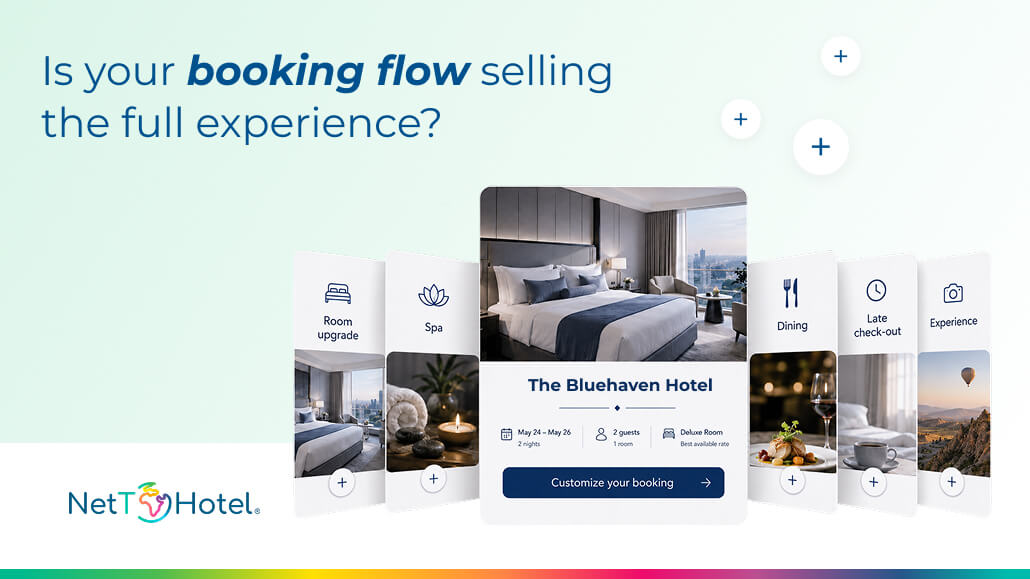
Hotels that cater to business travelers have an opportunity to show their guests the relaxing or fun activities they can offer.
Here, too, digital turns out to be a great resource: by monitoring all digital channels, it will be easier to intercept the traveler at the browsing and booking stage, suggesting the package best suited to his or her needs.
What elements need to be taken into account to attract the business traveler who wants to integrate fun and relaxation during their business trip?
- Are you planning to extend your stay? In this case, the traveler may prefer a planned itinerary.
- Will he stay at your facility only for the duration of the event or meeting? Surely he will want to relax or have fun at the end of the day.
- Are you traveling alone or with company? Will be more interested in services tailored to the family or partner accompanying them.
THE IDENTIKIT OF THE BLEISURE TRAVELER
The types of bleisure travelers are disparate but we can outline some recurring characteristics.
Business travelers can count on the company's support regarding, for example, the purchase of airline tickets. For this reason, they are often more likely to spend more on entertainment and dining.
The hectic pace of business travelers does not allow them to document in advance, the hotel facility should, therefore, take the opportunity to offer guests engaging experiences.
Even the length of stay in most cases, is not planned in advance. If travelers decide at the last minute to extend their stay, they must be involved in real time.
Your facility must, therefore, be prepared to cope with the "bleisure" phenomenon by implementing the right strategies to "capture" travelers.